Athlete’s Foot: What Is It, How Do You Treat It and How Can You Prevent It?
What is athlete’s foot?
Athlete’s foot, medically known as tinea pedis, is a fungal infection affecting the skin of the feet.
It is caused by fungi called dermatophytes, which thrive in warm, moist environments. This is why the spaces between the toes can be particularly susceptible.
Athlete’s foot can affect one or both feet and may spread to other areas, including the soles and sides of the feet. In some cases, the infection can also spread to the toenails.
And despite the name, you don't have to be an athlete to develop it.
What does athlete’s foot look like?
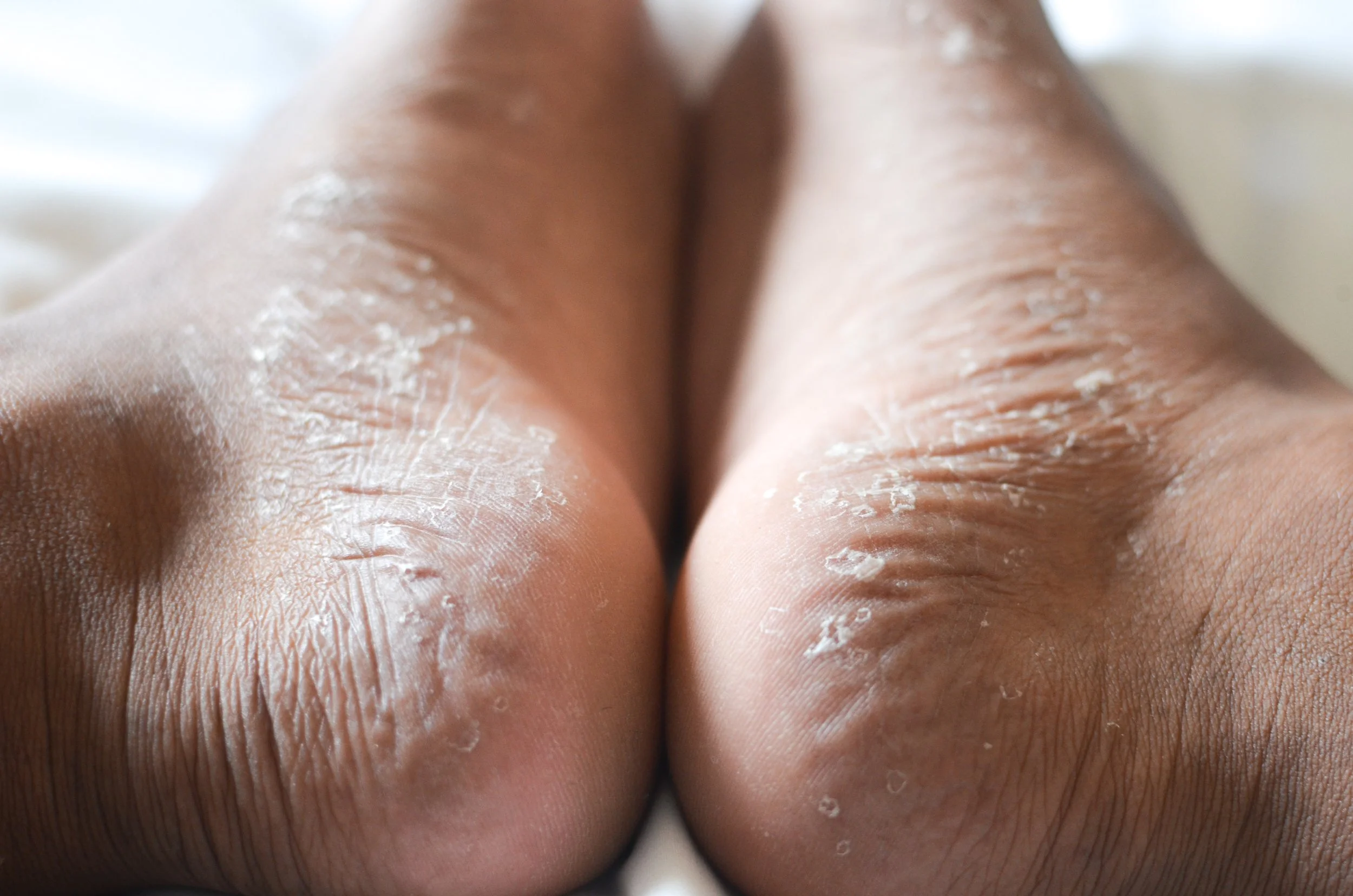
Athlete’s foot can look different from person to person, depending on the type of infection and where it occurs.
Common signs include:
Itching, particularly between the toes
Peeling or flaking skin
Red or irritated skin
White, soggy-looking skin between the toes
Dry, scaly skin on the soles or sides of the feet
Small blisters
Cracking or splitting of the skin
A burning or stinging sensation
Sometimes the symptoms are relatively mild, while in other cases the skin can become very sore and uncomfortable.
Is it always between the toes?
No.
Although athlete’s foot commonly begins between the toes, it can also affect the soles and sides of the feet.
One pattern can cause widespread dry, scaly skin across the sole and sides of the foot. This can sometimes be mistaken for simply having dry skin.
This is one reason why persistent scaling or peeling shouldn't automatically be treated with moisturiser alone.
How do you catch athlete’s foot?
The fungi responsible for athlete’s foot thrive in warm, damp environments and can be spread through contact with infected skin or contaminated surfaces.
You may be more likely to encounter the fungus in places such as:
Communal changing rooms
Swimming pools
Showers
Gyms
Sports facilities
Walking barefoot in communal areas can increase your exposure.
However, athlete’s foot can also develop without an obvious exposure, particularly when the feet are regularly warm and sweaty.
Why do some people keep getting athlete’s foot?
One of the biggest challenges with athlete’s foot is that it can recur.
Warm, enclosed footwear and sweaty feet can create an environment where fungi thrive. Wearing the same shoes repeatedly without allowing them to dry fully can also contribute to the problem.
Other factors that may increase the risk include:
Excessive sweating of the feet
Wearing footwear that doesn't allow the feet to breathe
Spending time in damp communal environments
Having previously had athlete’s foot
Having an altered skin barrier
Certain health conditions or medications that affect immunity
If athlete’s foot keeps returning, it is worth considering why it is recurring, rather than simply treating each episode as it appears.
How is athlete’s foot treated?
Treatment generally involves an antifungal medicine.
Many cases can be treated with an over-the-counter topical antifungal preparation. These are available as creams, sprays or other formulations.
It is important to follow the instructions provided with the product and complete the recommended course of treatment, even if the symptoms begin to improve.
Stopping treatment too early may allow the infection to return.
If you're unsure whether the problem is actually athlete’s foot, or if treatment isn't working, speak to a pharmacist, GP or podiatrist for further advice.
What about moisturiser?
Moisturiser has an important role in maintaining healthy skin, but it isn't a treatment for fungal infection.
If you have athlete’s foot, particularly between the toes, applying rich moisturiser to already damp or macerated skin may not be helpful.
Once the fungal infection has been appropriately treated, maintaining the skin barrier with suitable moisturisation may become part of your ongoing foot-care routine.
Keeping your feet dry is important
One of the simplest things you can do to reduce the risk of athlete’s foot is to pay attention to moisture.
Try to:
Dry your feet thoroughly
Take particular care between the toes after bathing or showering.
Change your socks regularly
If your feet sweat a lot, you may need to change your socks more frequently.
Choose breathable footwear
Footwear that allows heat and moisture to escape can help create a less favourable environment for fungal growth.
Rotate your shoes
Allow shoes time to dry properly between wears where possible.
Avoid sharing towels, socks or footwear
Fungal infections can spread between people.
Wear appropriate footwear in communal areas
Consider wearing suitable footwear around communal showers, changing rooms and swimming pools.
Can athlete’s foot affect your toenails?
Yes.
A fungal infection of the skin can sometimes spread to the toenails, resulting in fungal nail infection (onychomycosis).
However, not every thickened, discoloured or damaged toenail is caused by fungus.
Toenails can change for many different reasons, including trauma, pressure from footwear, psoriasis and other nail conditions.
This is why it is important not to assume that every unusual-looking nail is fungal.
When should you see a podiatrist?
If you're not sure what is causing changes to the skin on your feet, professional assessment can be helpful.
You should consider seeking advice if:
Symptoms persist despite appropriate treatment
The infection keeps coming back
The skin is becoming increasingly sore or cracked
You develop a wound or significant inflammation
You notice changes affecting your toenails
You're unsure whether the problem is actually athlete’s foot
You have diabetes or another condition that may increase your risk of foot complications
A podiatrist can assess the skin and nails, consider possible causes and advise you on appropriate foot-care and when further medical assessment may be needed.
Don't ignore persistent changes to your feet
Athlete’s foot is common and usually manageable, but persistent changes in the skin shouldn't simply be accepted as “normal”.
If your feet are itchy, peeling, cracked or unusually scaly, take a closer look.
Early recognition and appropriate treatment can help prevent the problem from becoming more persistent — and good everyday foot hygiene can reduce the chance of it returning.
At Bailey Podiatry & Reflexology, we believe that looking after your feet isn't just about treating problems when they become painful. It's about recognising changes early and supporting long-term foot health.
If you're concerned about changes to the skin or nails of your feet, we're happy to help you understand what might be happening and whether further assessment is appropriate.
Looking after your feet starts with paying attention to them.
Book your appointment today:
📍 The Glen, Main Street, Brampton, CA8 1SB
📞 016977 2191
💻 www.baileypodiatry.co.uk/book
We’re here to help you put your best foot forward — comfortably and confidently.
Bailey Podiatry & Reflexology
Supporting your foot health – and your whole wellbeing