Why Small Foot Lesions Should Never Be Ignored in High-Risk Patients
Keeping Your Feet Healthy, Comfortable, and Early Attention to Minor Foot Changes Can Prevent Major Complications
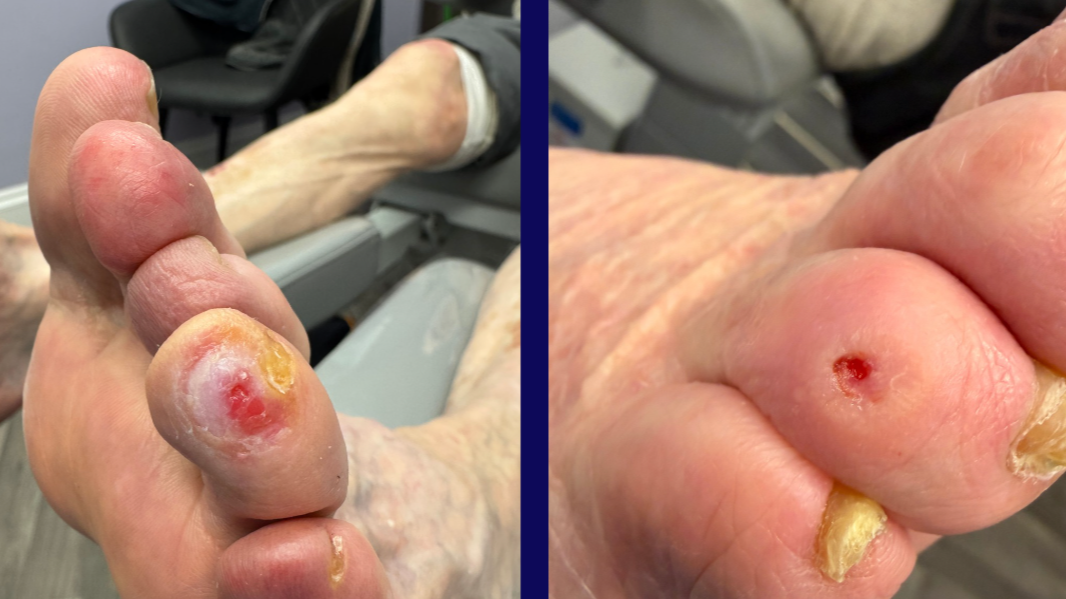
In clinical practice, some of the most significant foot complications begin as seemingly minor changes — a small corn, a persistent area of hard skin, or an unnoticed blister.
For individuals living with diabetes, rheumatoid arthritis, peripheral vascular disease, or reduced sensation, these early changes can progress rapidly if not identified and managed appropriately.
Why “Small” Doesn’t Always Mean “Simple”
In a healthy foot, pain and pressure signals usually prompt early action. However, in high-risk patients, this protective mechanism may be reduced or absent.
As a result:
Pressure lesions may continue unchecked
Skin breakdown can occur beneath callus
Minor blisters can become open wounds
Infection risk increases significantly
What appears superficial may already have deeper tissue involvement.
Corns, Callus, and Pressure: What’s Really Happening?
A corn or callus is often the skin’s response to repeated mechanical stress. While this is a natural protective response, it can also indicate underlying structural or biomechanical issues.
If left untreated:
Pressure continues beneath the lesion
Skin thickening masks developing tissue damage
Breakdown can occur without early warning pain
This is particularly relevant in neuropathic or vascular-compromised feet.
The Risk of Delayed Presentation
Delayed assessment is one of the most important factors in foot ulcer development.
Early-stage lesions are far easier to manage than established wounds.
Common progression patterns include:
Callus → sub-callus haemorrhage → ulceration
Blister → skin breakdown → infection
Corn → chronic pressure point → tissue necrosis
Early intervention can significantly reduce these risks.
Who Is Most at Risk?
Increased vigilance is especially important in:
Diabetes mellitus
Rheumatoid arthritis
Peripheral neuropathy
Peripheral arterial disease
Patients with previous ulceration history
Regular podiatry review is a key part of prevention.
Prevention and Early Intervention
Effective prevention strategies include:
Routine podiatry assessments
Early debridement of callus and pressure lesions
Footwear assessment and modification
Daily self-checking of feet
Prompt review of any new or changing lesion
📚 Current Clinical References
NICE Guideline NG19: Diabetic foot problems: prevention and management
International Working Group on the Diabetic Foot (IWGDF) Guidelines, 2023 update
Armstrong DG et al. Diabetic Foot Ulcers: Prevention and Management, Clinical Reviews in Diabetes Care
European Wound Management Association (EWMA) guidance on pressure-related foot lesions
Royal College of Podiatry: High-risk foot clinical guidance
Key Message
Not all skin changes are harmless. In high-risk feet, early assessment can be the difference between a simple treatment and a complex wound pathway.
If you notice persistent hard skin, new discomfort, or any change in foot appearance, early professional assessment is strongly advised.
📍 The Glen, Main Street, Brampton, CA8 1SB
📞 016977 2191
💻 www.baileypodiatry.co.uk/book
We’re here to help you put your best foot forward — comfortably and confidently.
Bailey Podiatry & Reflexology
Supporting your foot health – and your whole wellbeing