Corns vs Callus: How to Tell the Difference — and When to See a Podiatrist
What Is a Callus?
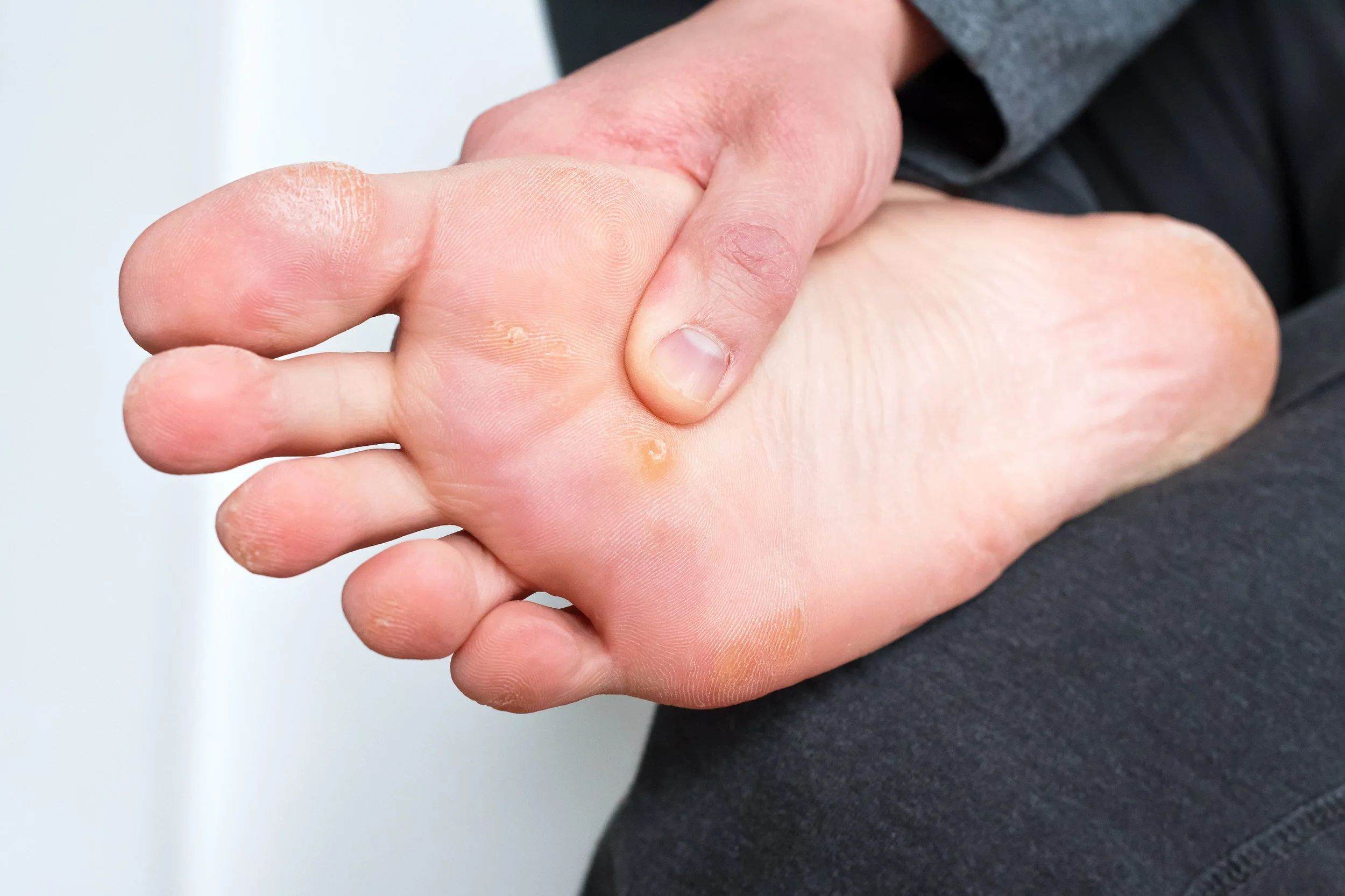
A callus (also known as tyloma) is an area of thickened skin that forms over a broad surface due to repeated pressure or friction.
Common locations:
Soles of the feet (especially under the ball of the foot)
Heels
Areas exposed to weight-bearing or rubbing
Typical features:
Diffuse, spread-out thick skin
Yellowish or waxy appearance
Usually painless (unless very thick)
Skin lines continue across the surface
Calluses often develop from factors such as:
Poorly fitting footwear
High-pressure walking patterns
Foot deformities (e.g. bunions, hammertoes)
Long periods of standing or walking
Dry skin
While generally not dangerous, thick callus can crack, become painful, or lead to ulceration — particularly in people with diabetes or reduced circulation.
What Is a Corn?
A corn is a smaller, more localised area of hard skin with a central core that presses into the deeper layers of the skin — this is what makes it painful.
Common locations:
Tops or sides of toes
Between toes (soft corns)
Pressure points from footwear
Typical features:
Small, round, well-defined lesion
Hard centre (“plug” or “nucleus”)
Often very tender when pressed
Skin lines disrupted
May feel like walking on a pebble
There are different types of corns:
Hard corns: Firm and dry, usually on toe joints
Soft corns: Moist and white, typically between toes
Seed corns: Tiny, multiple lesions on the sole
Corns usually develop where bone prominences rub against footwear or adjacent toes.
Why It Matters to Tell the Difference
Although both conditions result from pressure, they behave differently and require tailored management.
Mistaking one for the other — or confusing them with a verruca — can lead to ineffective or even harmful treatment. For example, over-the-counter corn plasters containing strong acids may damage healthy skin, especially in older adults or people with diabetes.
Accurate diagnosis is key.
Can You Treat Them at Home?
Some mild cases can be managed with basic self-care, such as:
Wearing properly fitting footwear
Using cushioned insoles
Moisturising regularly (especially with urea-based creams)
Gently using a foot file on callus (never cut skin yourself)
However, home treatments do not address the underlying cause of pressure — so recurrence is common.
Avoid “bathroom surgery.” Cutting or digging at the skin can lead to infection, bleeding, and worsening pain.
When to See a Podiatrist
You should seek professional assessment if:
The area is painful
The lesion keeps returning
You are unsure whether it is a corn, callus, or verruca
There is cracking, bleeding, or signs of infection
You have diabetes, poor circulation, or nerve damage
Over-the-counter treatments have failed
Walking is affected
A podiatrist can safely reduce the thickened skin using sterile instruments, relieving pressure immediately and comfortably.
How a Podiatrist Can Help
Treatment is not just about removing the hard skin — it’s about preventing it from coming back.
Your podiatrist may provide:
Safe debridement (removal of hard skin)
Pressure offloading techniques
Padding or silicone devices
Footwear advice
Orthotic assessment if needed
Treatment of underlying biomechanical issues
For persistent or complex cases, addressing gait or pressure distribution is often the key to long-term resolution.
Special Considerations for High-Risk Patients
For individuals with diabetes, neuropathy, or vascular disease, even seemingly minor hard skin can become serious if ignored. Thick callus increases pressure on underlying tissues and can precede ulcer formation.
Regular professional foot care is strongly recommended in these cases.
The Bottom Line
Corns and calluses are common, treatable, and preventable — but they should not be ignored, especially if painful or recurring.
If something on your foot hurts, feels hard, or just “doesn’t look right,” an assessment can provide reassurance and effective treatment.
Healthy feet support your mobility, independence, and overall wellbeing — and you don’t have to live with discomfort.
If you are concerned about a painful area on your foot or would like professional advice, please contact the clinic to arrange an appointment.
📍 The Glen, Main Street, Brampton, CA8 1SB
📞 016977 2191
💻 www.baileypodiatry.co.uk/book
We’re here to help you put your best foot forward — comfortably and confidently.
Bailey Podiatry & Reflexology
Supporting your foot health – and your whole wellbeing
#baileypodiatryandreflexology #corns #callus #hardskin #footpain #podiatryuk #chiropodist #foothealth #healthyfeet #footcare #footclinic #heelpain #balloffootpain #toepain #diabeticfootcare #preventativecare #bramptoncumbria #cumbria #cumbriabusiness #ruralhealthcare #smallbusinessuk #lookafteryourfeet #walkpainfree