Winter Foot Care Tips: Protecting Your Feet Through Cold Weather
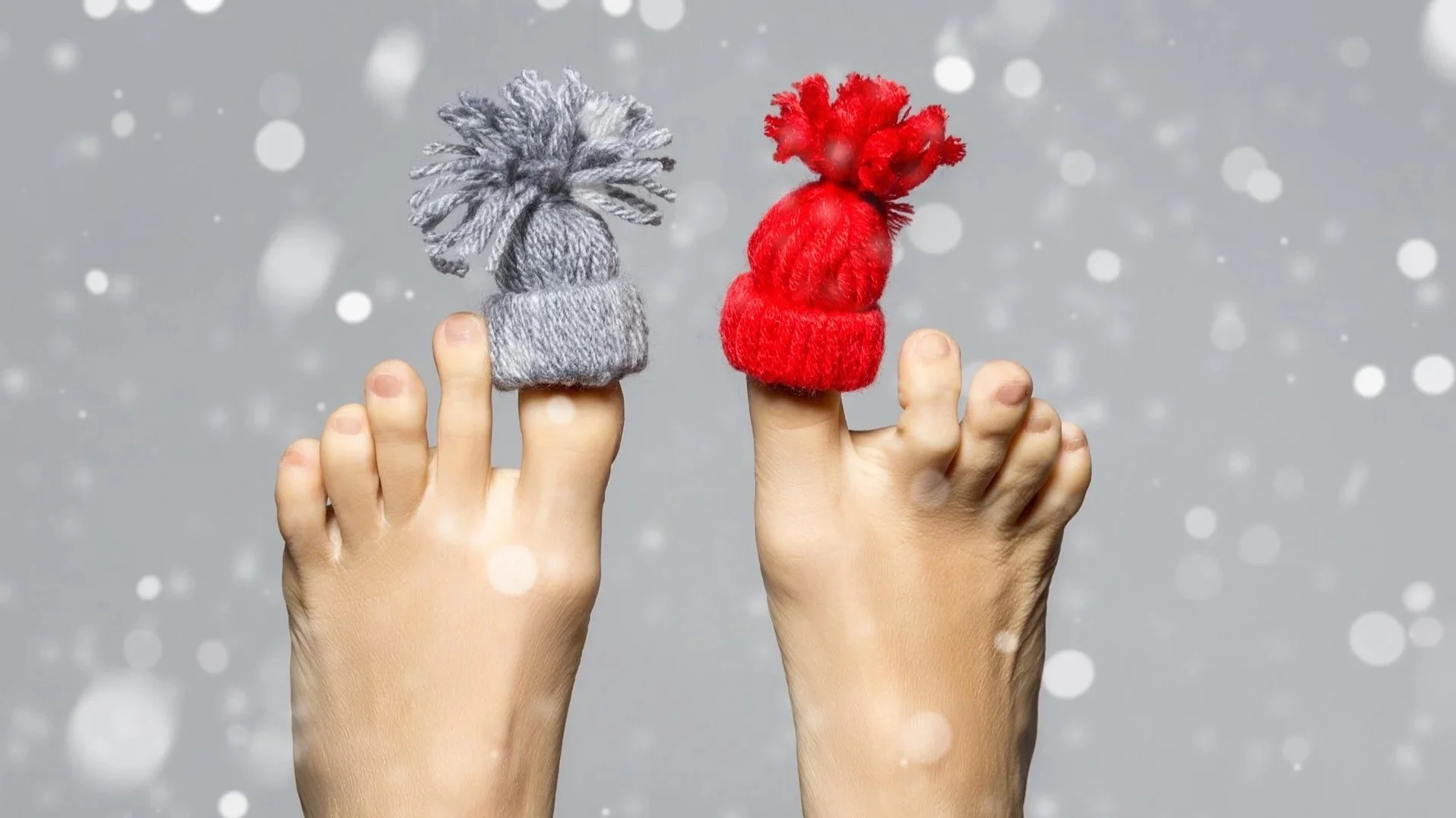
Why Winter Affects Our Feet
When we are exposed to cold temperatures, the blood vessels in our extremities naturally narrow to conserve heat. For some people, this happens more dramatically, or the vessels don’t re-open effectively. This can lead to slower blood flow to the toes, reduced skin oxygenation, and vulnerability to irritation or tissue damage.
You may notice in colder months:
Cold, numb or tingling toes
Dry, tight or cracked skin
Increased sensitivity or colour changes in the toes
Slow-to-heal blisters or rubbing spots
Supporting circulation and keeping the feet warm and well-protected makes a significant difference.
Chilblains
Chilblains are small, red or purple patches that develop when the skin reacts to sudden temperature change. They often affect toes, especially where there is pressure from shoes or socks.
Symptoms
Burning or itching sensation
Red, purple or swollen skin
Local tenderness
In some cases, skin can blister or break down
How to Help Prevent Chilblains
Keep feet consistently warm — avoid sudden warming (e.g., placing cold feet on a radiator).
Wear thermal or bamboo socks that hold warmth but allow breathability.
Choose footwear with enough room around the toes to prevent pressure.
Avoid walking barefoot on cold floors.
If feet get wet, dry and warm them slowly and gently.
Treatment
Do not rub chilblains to warm them — this can cause more tissue irritation. Instead, keep the area warm, protected and moisturised. If the skin breaks, seek podiatry care to avoid infection.
Raynaud’s Phenomenon
Raynaud’s is a condition where the small blood vessels temporarily over-react to cold or stress. Toes may turn white, purple or blue, then red as circulation returns. This can be painful or uncomfortable.
Management Tips
Keep your whole body warm — not just your feet.
Wear thermal socks and consider sock layering without adding pressure.
Avoid smoking, as it further narrows blood vessels.
Manage stress where possible; relaxation techniques can help reduce severity.
Gentle foot movement — such as ankle circles and toe flexing — can encourage blood flow.
For some people, medication is helpful; speak with your GP or rheumatologist if symptoms significantly affect daily life.
Warming Creams to Support Circulation
In clinic, we often recommend warming foot creams to help improve comfort and circulation during colder months. Two products we regularly use and stock are Akilhiver (Akeo Akiwinter) and Gehwol Red.
Akilhiver is formulated to help protect the skin from cold sensitivity. It creates a gentle insulating effect on the skin's surface, helping to maintain warmth in the toes and feet. This can be particularly beneficial for those prone to chilblains, as it supports the skin’s natural barrier and reduces the likelihood of inflammatory flare-ups triggered by temperature changes.
Gehwol Red works slightly differently. It contains capsicum extract, which promotes localised blood flow to the skin’s surface. This helps to encourage a warming sensation in colder feet, supporting those who struggle with Raynaud’s symptoms or generally poor circulation. It can also help relax tense muscles in the foot and lower leg.
How to Use Warming Creams Safely:
Apply to intact skin only (never on open wounds or active chilblains).
Use a small amount and massage gently from toes toward the ankle to encourage upward circulation.
Avoid using alongside heat packs or hot water bottles to prevent skin irritation.
These creams are designed to support comfort, not replace medical care. If you experience ongoing cold, discoloured or painful toes, or if you’re unsure which product would be best for your needs, we can guide you in clinic. They can be purchased in clinic or via our online shop for collection in clinic only.
General Winter Foot Care Tips
Maintain Skin Hydration
Cold air draws moisture out of the skin.
Use an emollient foot cream, particularly around heels and toes.
Avoid creams with high alcohol content which can dry skin.
Choose the Right Footwear
Ensure footwear has insulation but remains breathable.
Allow enough room for socks without creating pressure.
Check the inside of footwear for seams or rough stitching that could rub.
Support Circulation
Gentle foot and ankle movement can encourage blood flow.
Reflexology and warm wax therapy can be soothing and circulation-supportive in colder months.
Avoid sitting for long periods with legs crossed.
Monitor Skin Health
If you have diabetes, reduced sensation, circulation issues, or Rheumatoid Arthritis, check your feet daily for:
Redness
Blistering
Cracks or dry patches
Any area that feels sore or irritated
Early care prevents complications.
When to Seek Professional Support
If you notice:
Persistent skin changes
Painful sores that aren’t healing
New colour changes that concern you
Recurring chilblains or Raynaud’s episodes that affect daily life
It is helpful to book an assessment. A podiatrist can support skin protection, footwear advice, pressure relief, wound management and circulation-aware care strategies.
📍 The Glen, Main Street, Brampton, CA8 1SB
📞 016977 2191
💻 www.baileypodiatry.co.uk/book
We’re here to help you put your best foot forward — comfortably and confidently.
Bailey Podiatry & Reflexology
Supporting your foot health – and your whole wellbeing
References
Hughes M, Anderson ME. Chilblains and Perniosis in Rheumatic Disease. Rheumatology (Oxford). 2020;59(10):e14–e15.
Herrick AL. Raynaud’s Phenomenon. Journal of Scleroderma and Related Disorders. 2019;4(2):66-76.
NHS UK. Raynaud’s Phenomenon – Overview. Updated 2024.
National Institute for Health and Care Excellence (NICE). Peripheral vascular disease: foot problems. NICE Clinical Knowledge Summary. Updated 2023.
#baileypodiatryandreflexology #podiatryclinic #footcaretips #winterwellness #foothealthmatters #circulationsupport #chilblains #raynaudsawareness #healthfeethealthybody #reflexologybenefits #coldweathercare #cumbriahealth #bramptoncumbria